Work / 02
The Dissonance of Wind in the Anthropocene Mind
A kinetic membrane driven by distant winds
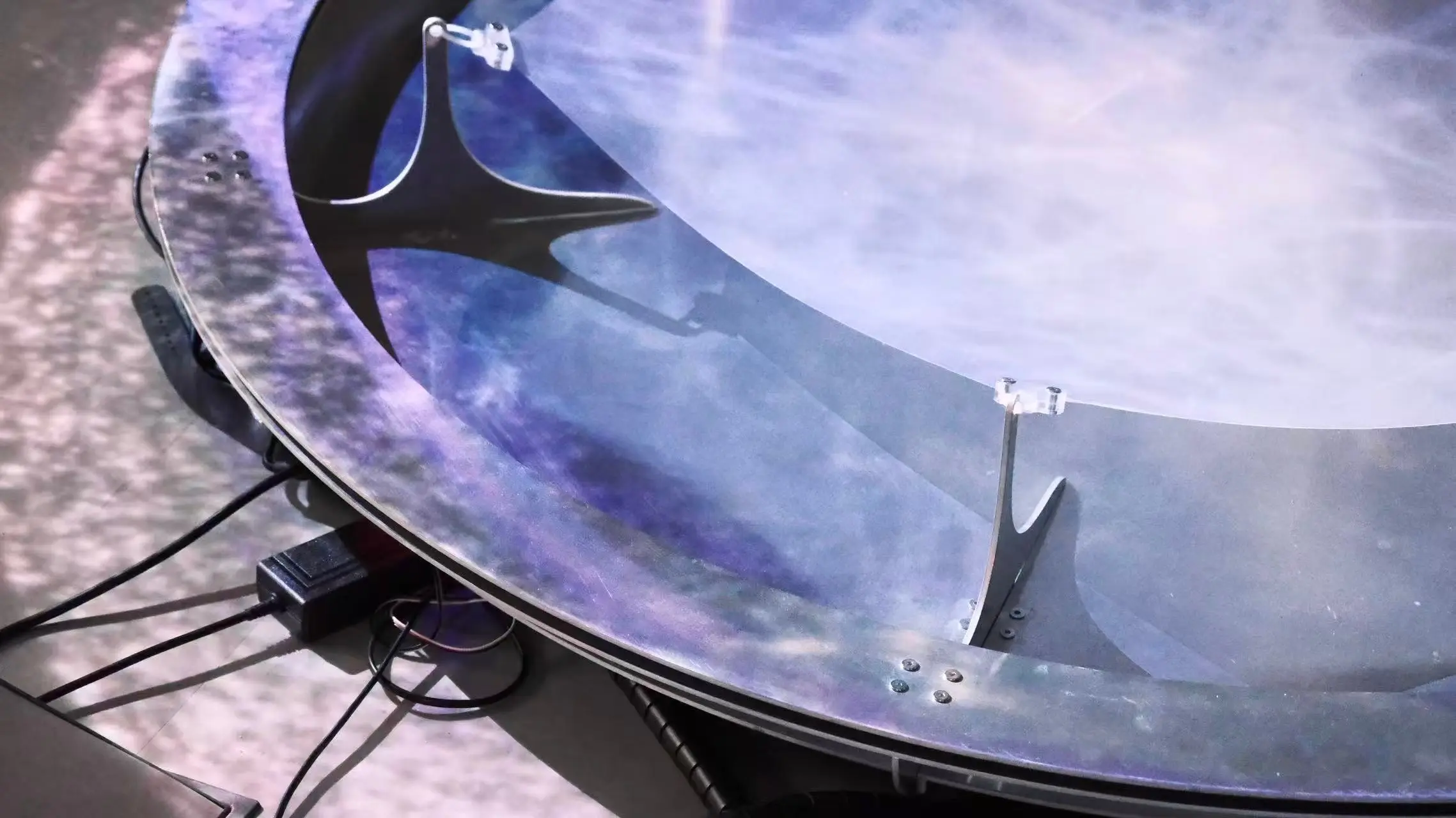
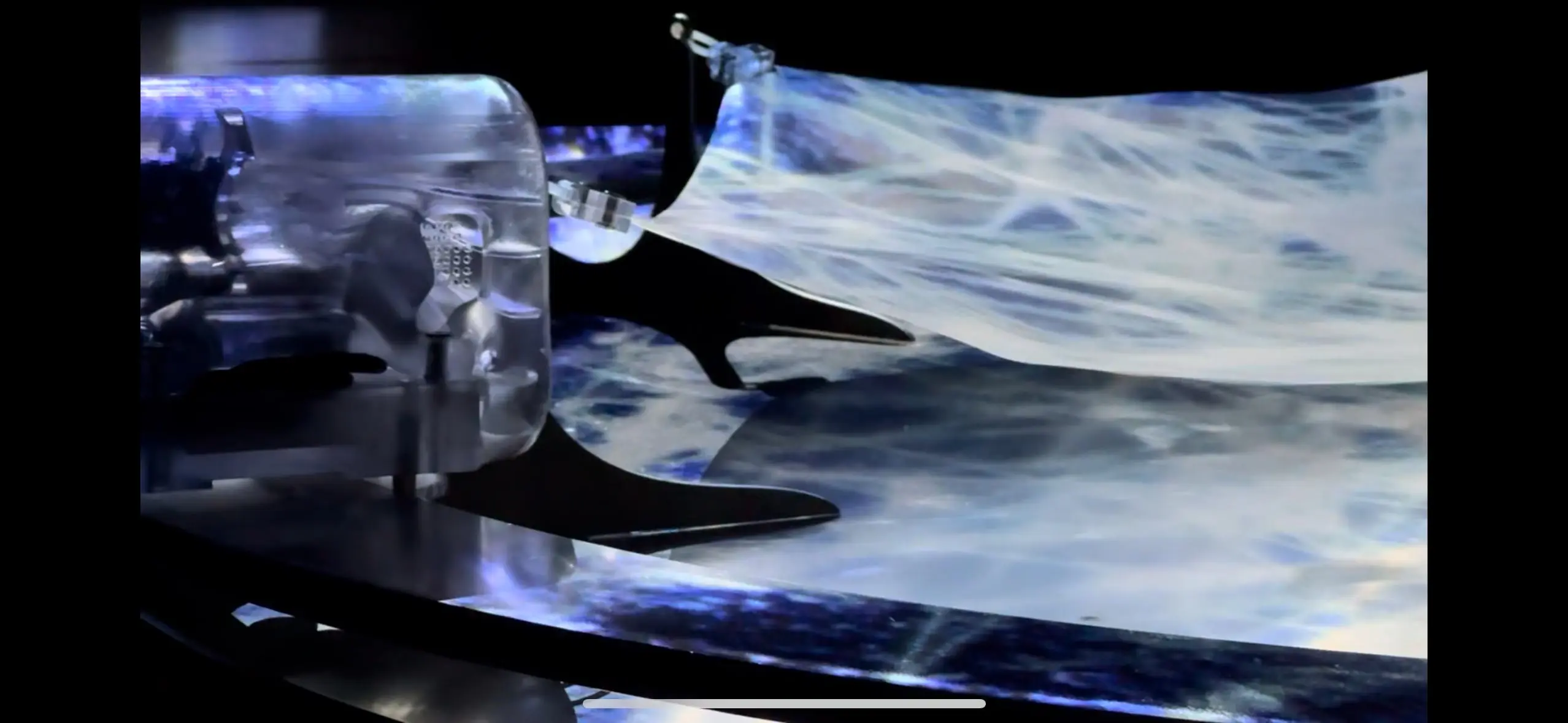
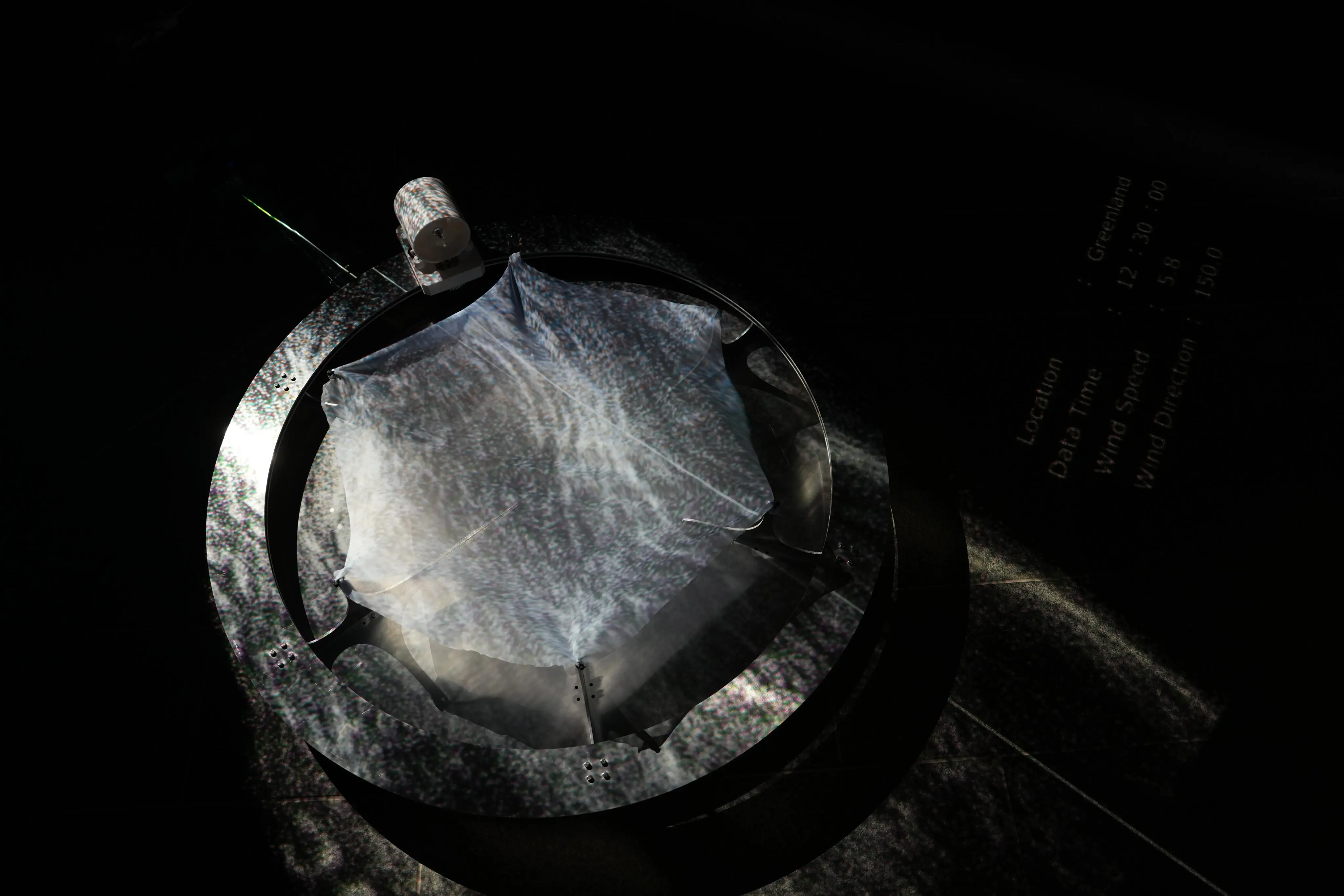
The Dissonance of Wind in the Anthropocene Mind is a kinetic installation that translates live wind data from a remote weather station in Greenland into the physical movement of a fabric membrane, stretched inside a circular aluminium frame. Wind that no one is standing in becomes a present, breathing object in the room.
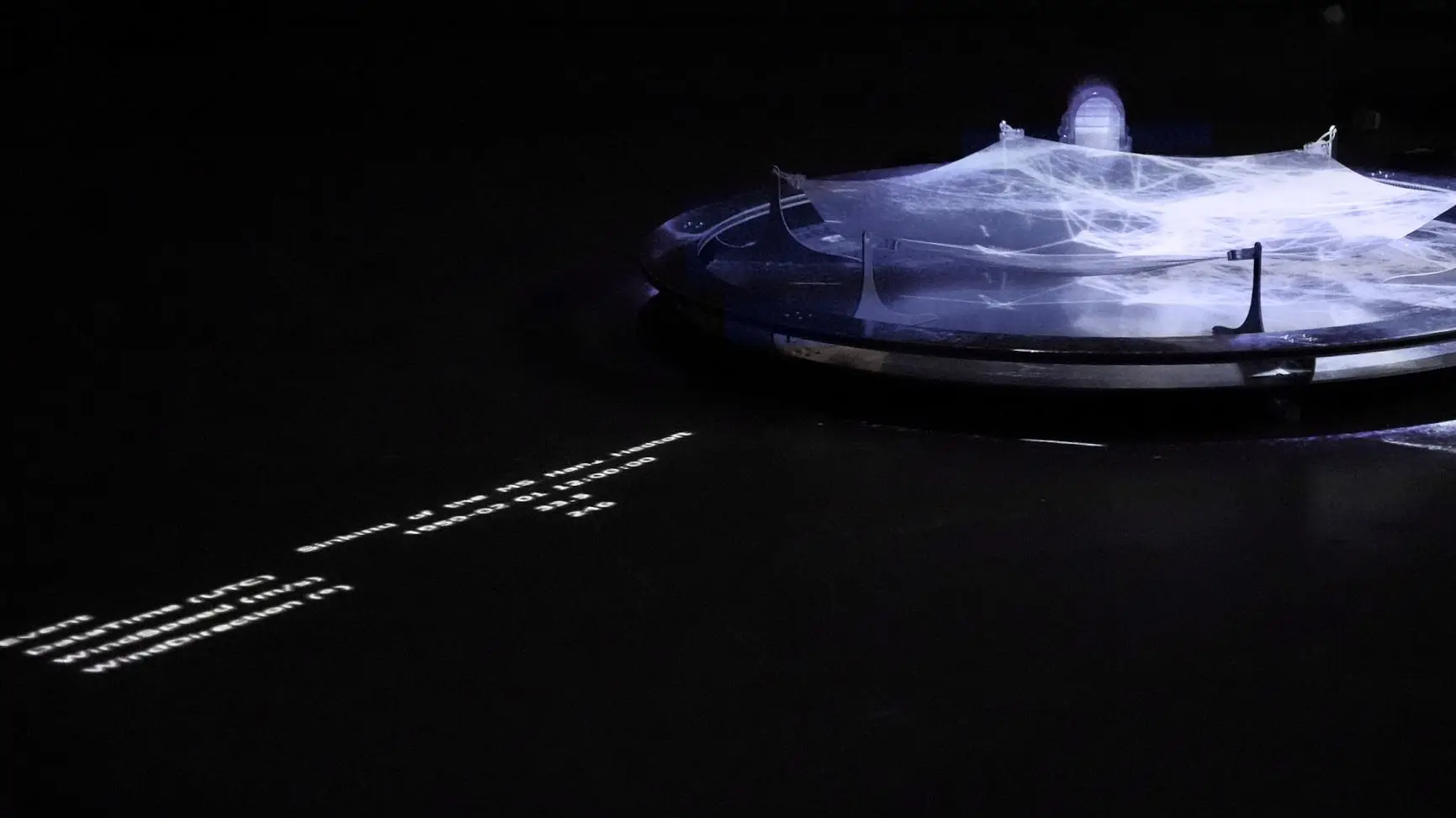
The work stages a strange distance that defines the Anthropocene: climate reaches us as data before it reaches us as weather. Beside the membrane, location, data time, wind speed and wind direction are projected as a quiet instrument readout, while the surface itself moves with conditions measured thousands of kilometres away.
Inside the machine
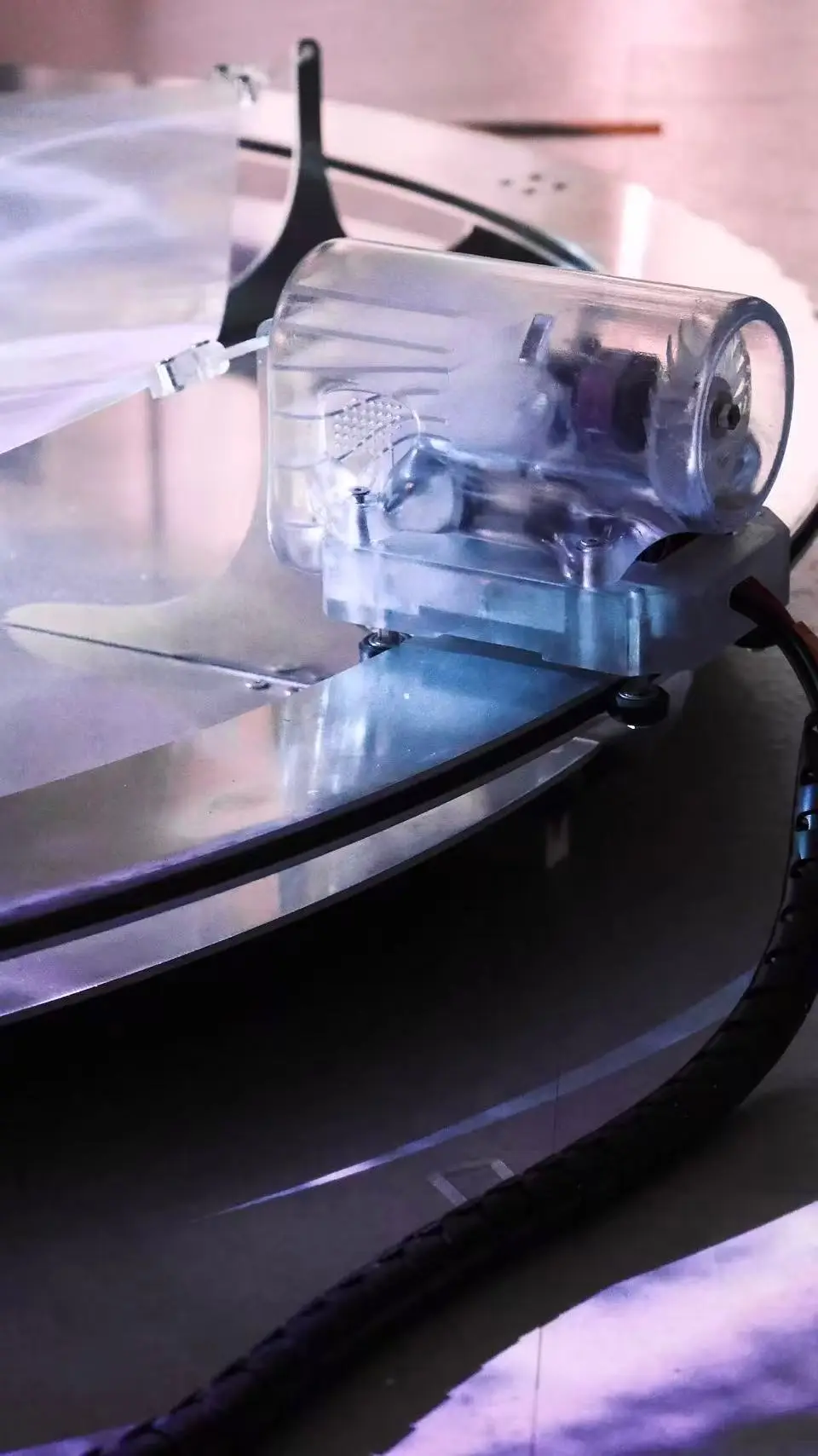
A custom software layer polls live weather data and maps wind speed and direction onto the installation’s drive system in real time, so the membrane’s motion is never composed — it is weather, replayed at one remove. Structure, electronics and control software were developed and fabricated in-house.
Because the input is live, the work has no loop and no score. Calm in Greenland is calm in the room; when the wind rises there, it rises here. The membrane can hold almost still for long stretches and then move without warning, and neither state is authored — the installation simply stays open to whatever the weather station reports. The projected readout keeps that honesty visible: the numbers beside the membrane are the same numbers driving it.
Process
The work was developed the way DFFF develops all of its kinetic installations: as one continuous piece of work from concept to machine. The circular aluminium frame, the tensioning of the fabric membrane, the drive mechanics, the electronics and the control software were designed, engineered and fabricated in the studio in London, each layer adjusted against the others — the software shaped around what the mechanism can physically do, the mechanism shaped around how the data actually behaves.
A live feed imposes its own discipline. Wind does not arrive as a smooth signal; it gusts, drops and stalls. The control layer has to carry that irregularity into physical movement that still reads as weather rather than noise — an engineering problem and a compositional one at the same time, and the point in the build where the studio’s mechanical and software work had to meet most precisely.
In the space
In the room the work reads first as a quiet object: a stretched fabric surface held in a metal ring, a readout projected beside it like an instrument panel. It asks for duration rather than interaction — nothing responds to the visitor, nothing is triggered. What the membrane does next is decided by the weather over Greenland, and standing with the work means watching a place you cannot see through the movement of a surface you can.
As a spatial experience it is deliberately the opposite of spectacle: one surface, one data stream, one slow correspondence between a remote landscape and a room in London. Inside the studio’s practice it is the counterweight to the machines built for noise and crowds — the same engineering, turned down to a whisper.
Credits
- Concept, design, engineering & fabricationDFFF Studio
Shown at
- London, 2025