Work / 01
Blackbox
A suspended kinetic system for dark rooms
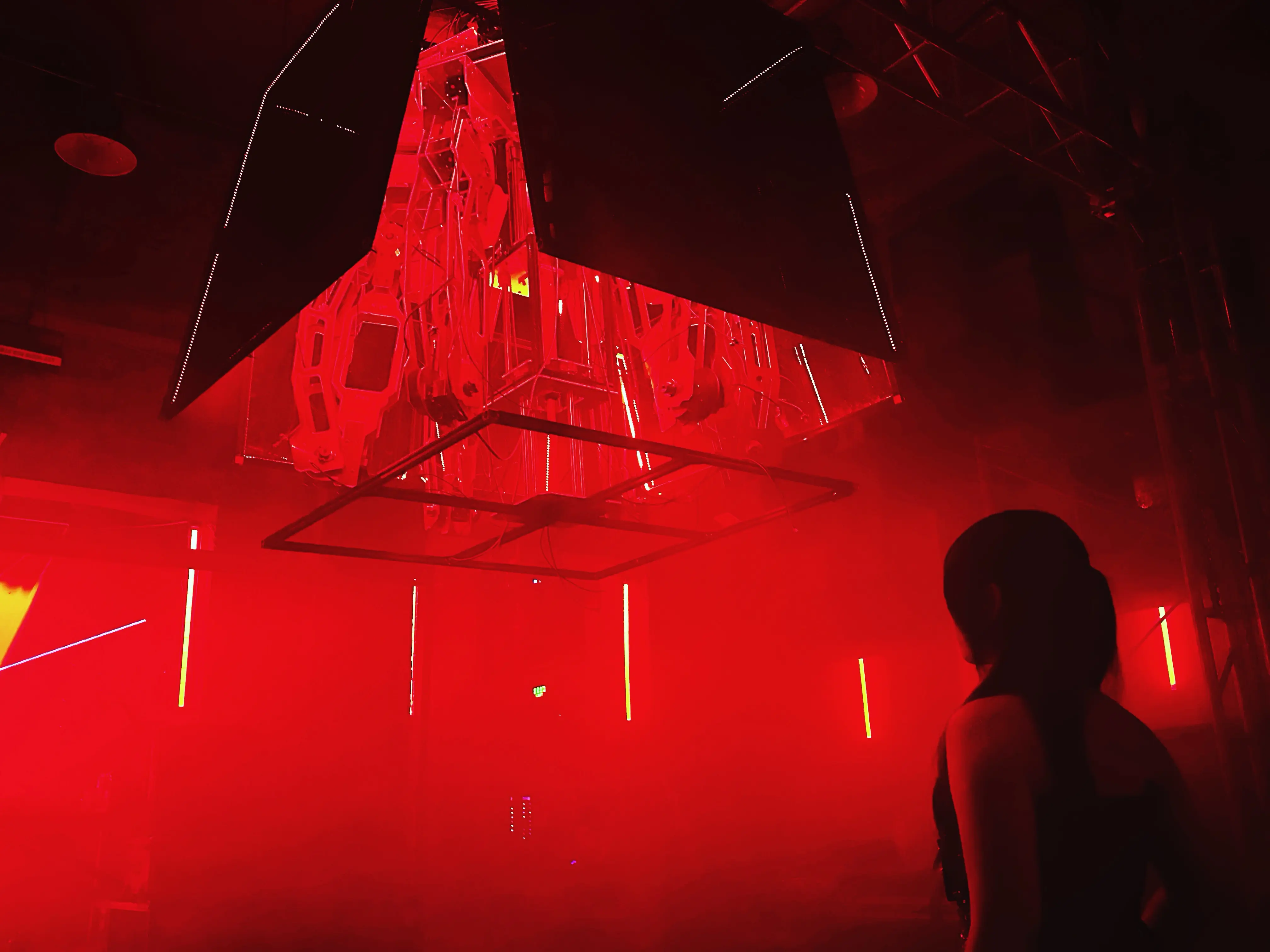
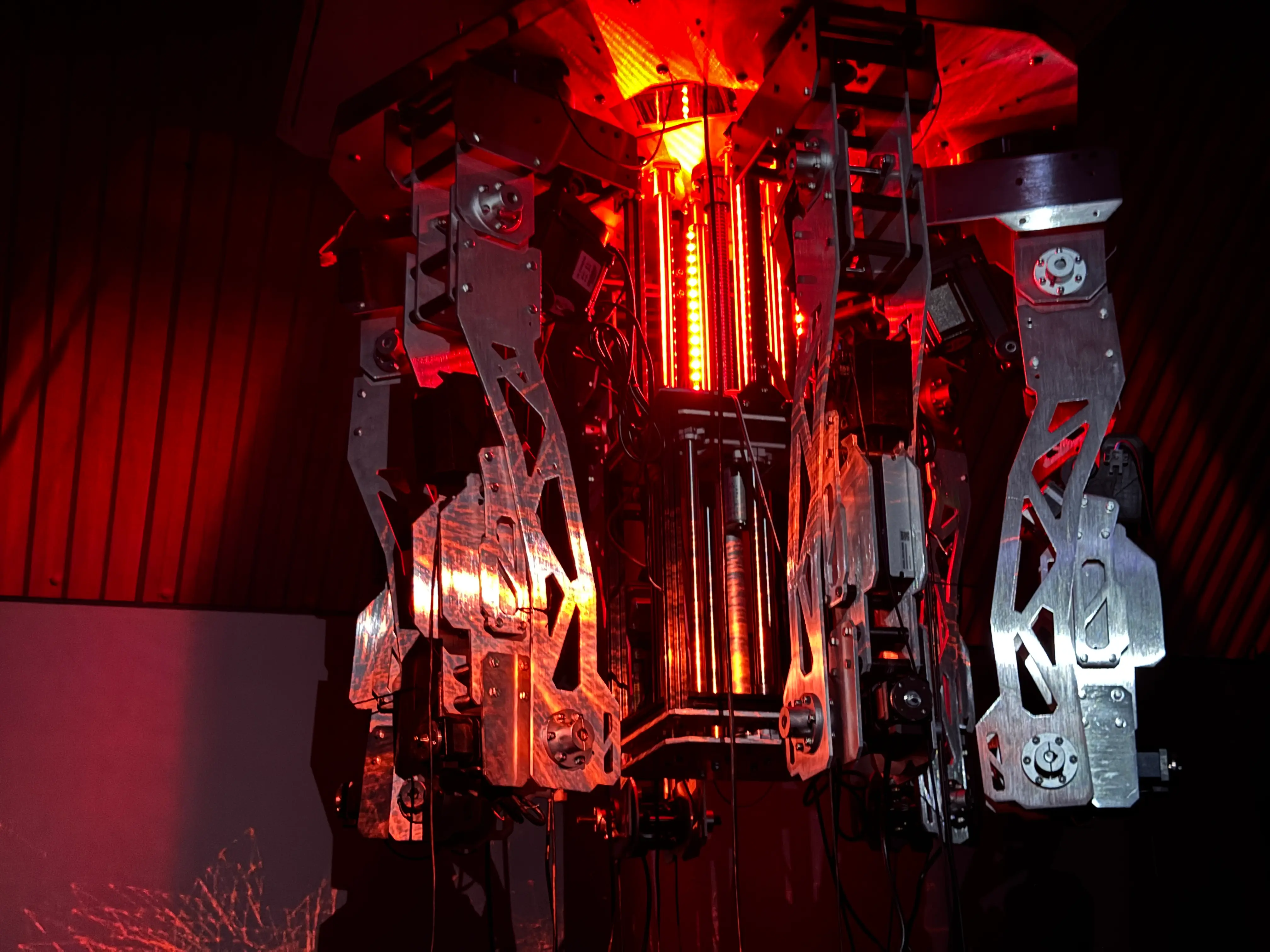
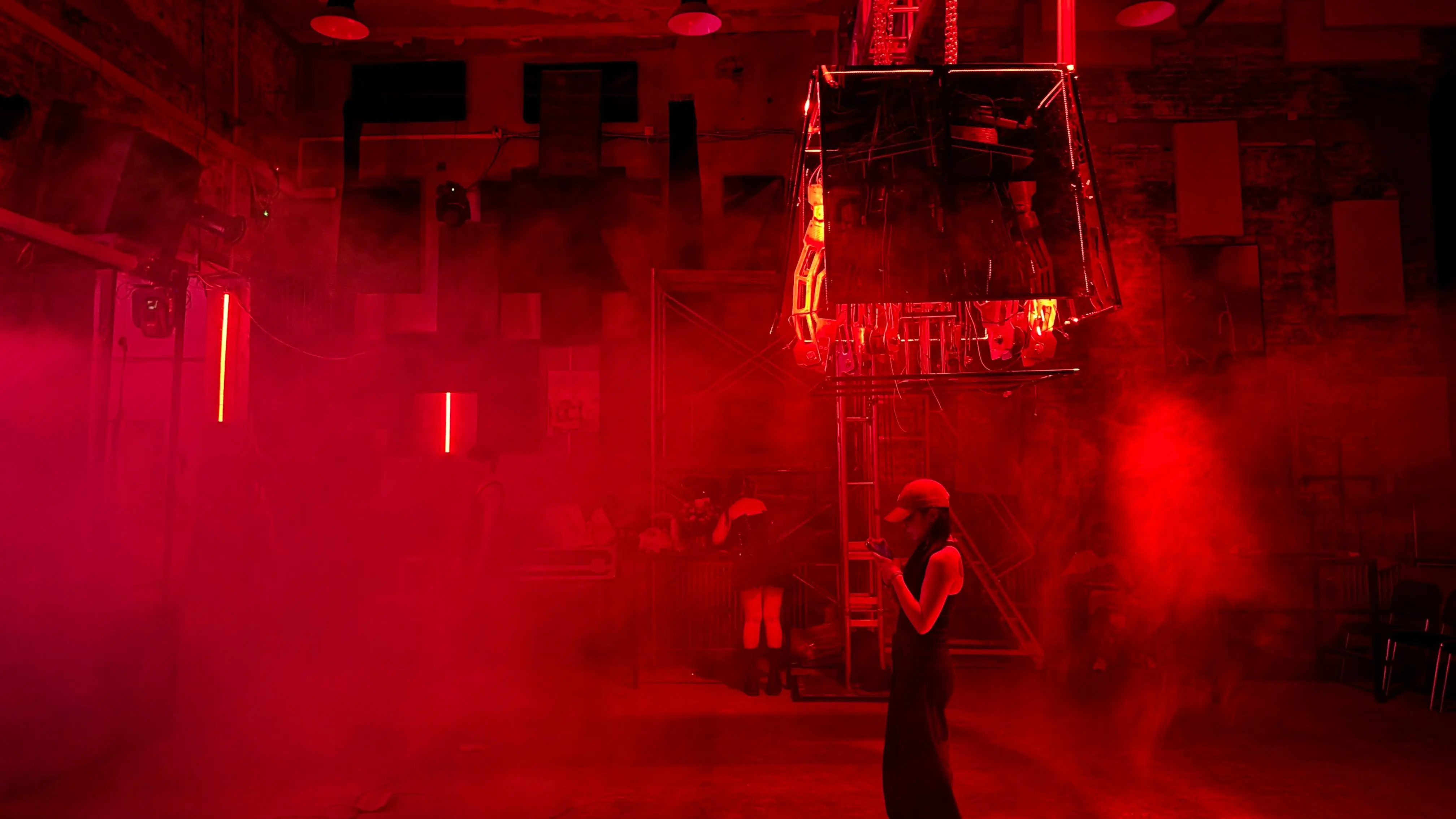
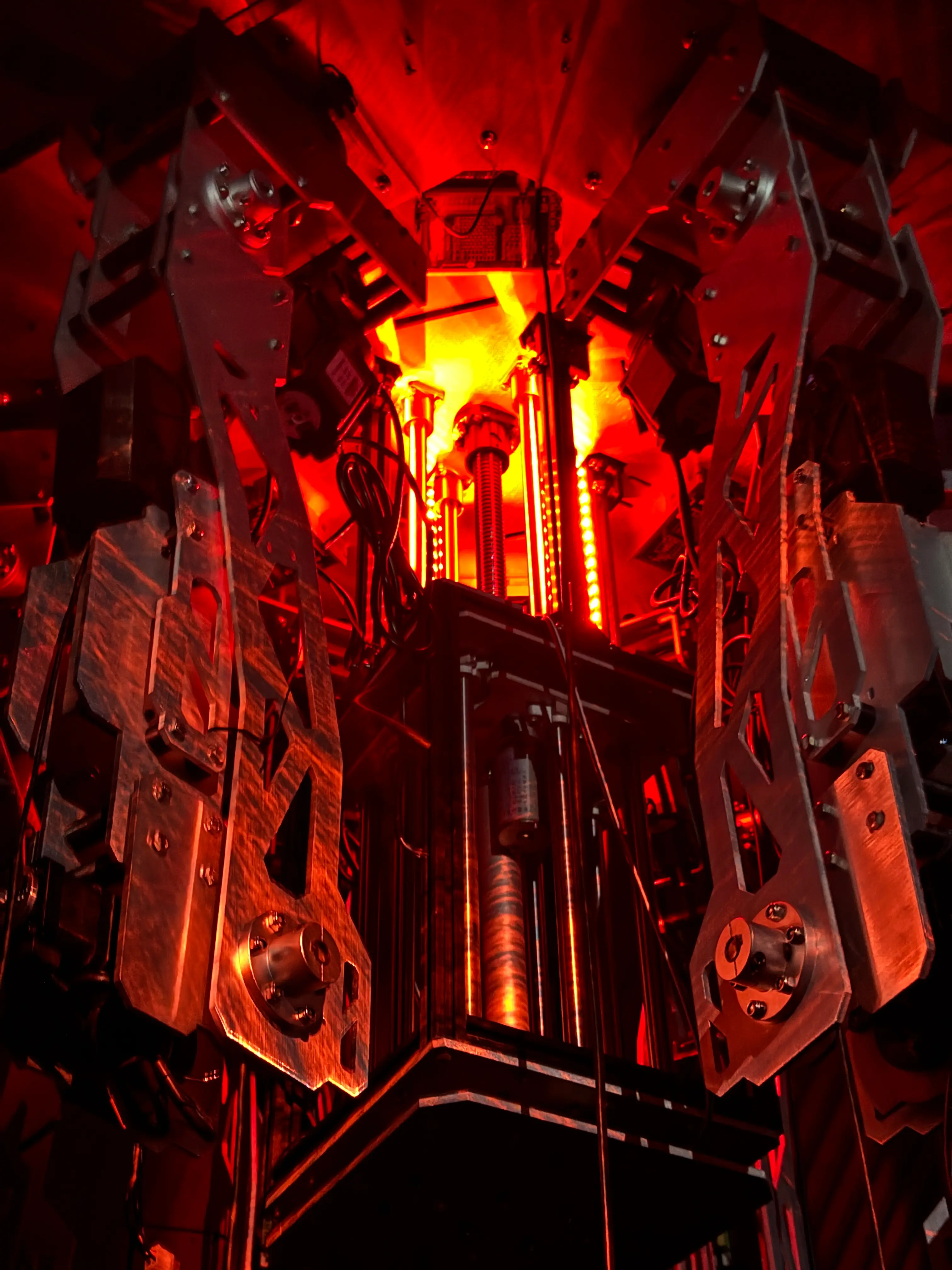
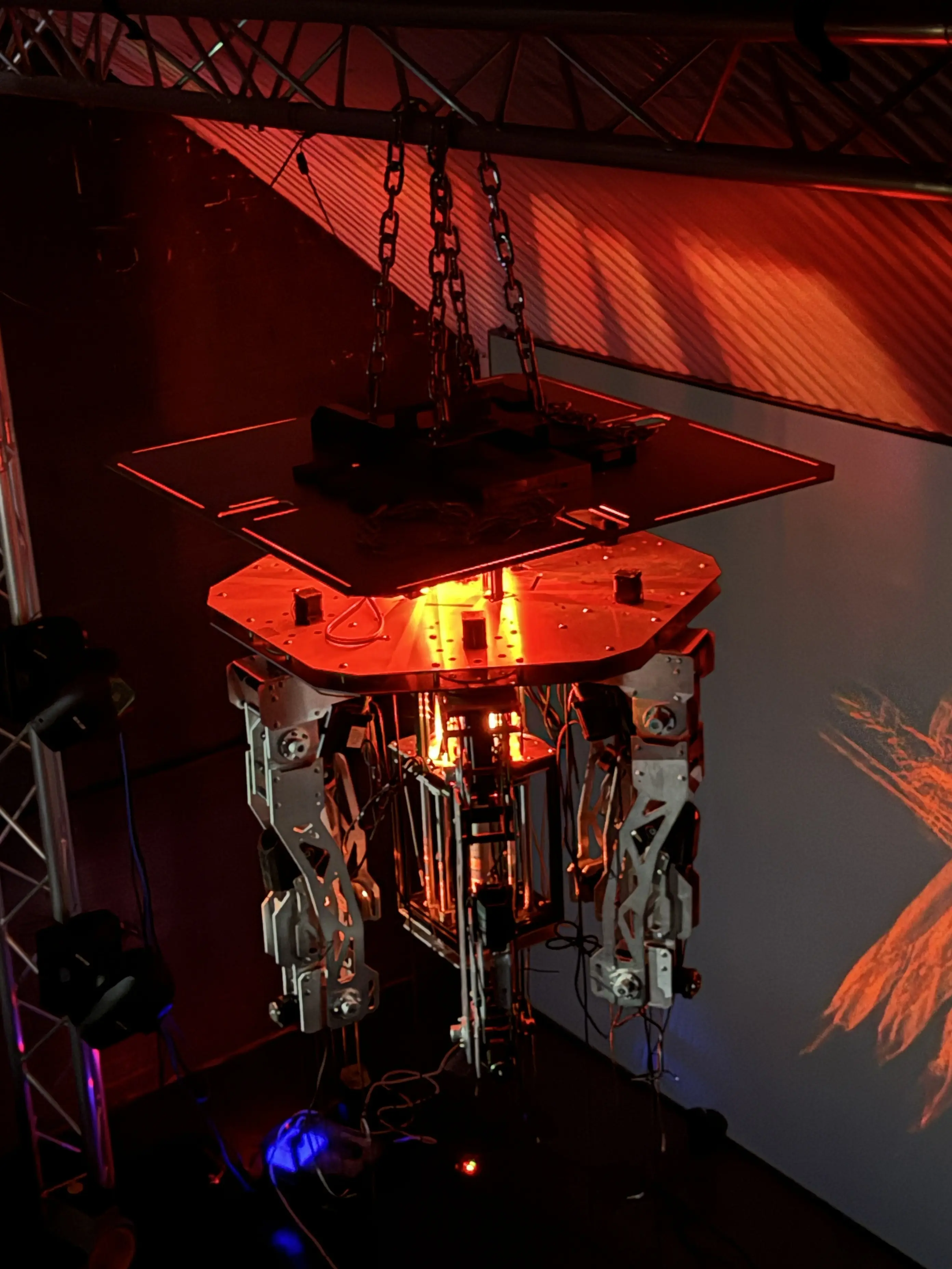
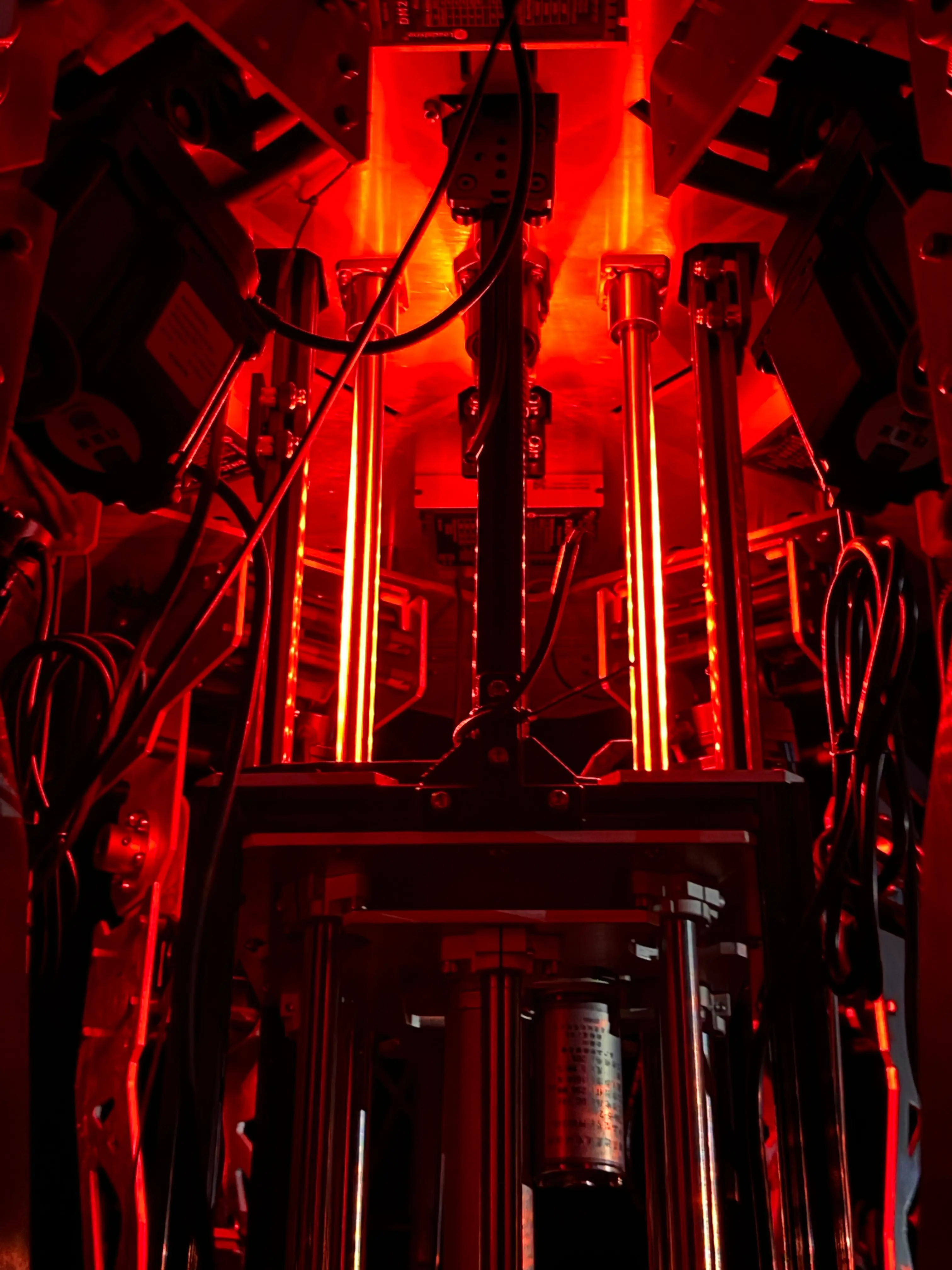
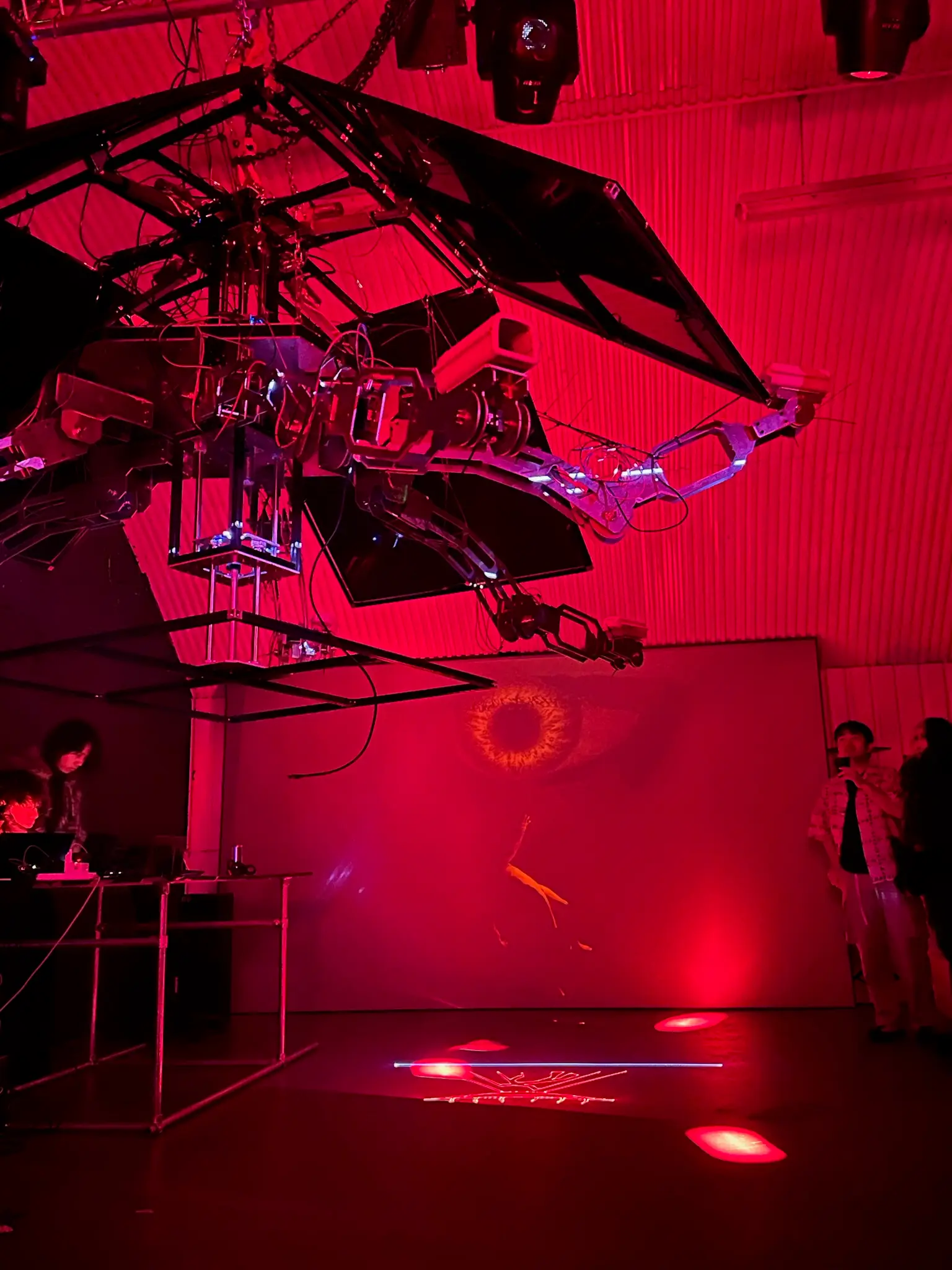
Blackbox is a suspended kinetic art installation — a machine organism hanging above the crowd. CNC-cut aluminium armatures, mirrored panels and LED arrays are assembled into a single mechanical body that opens, closes and turns through the night, washed in red light and fog.
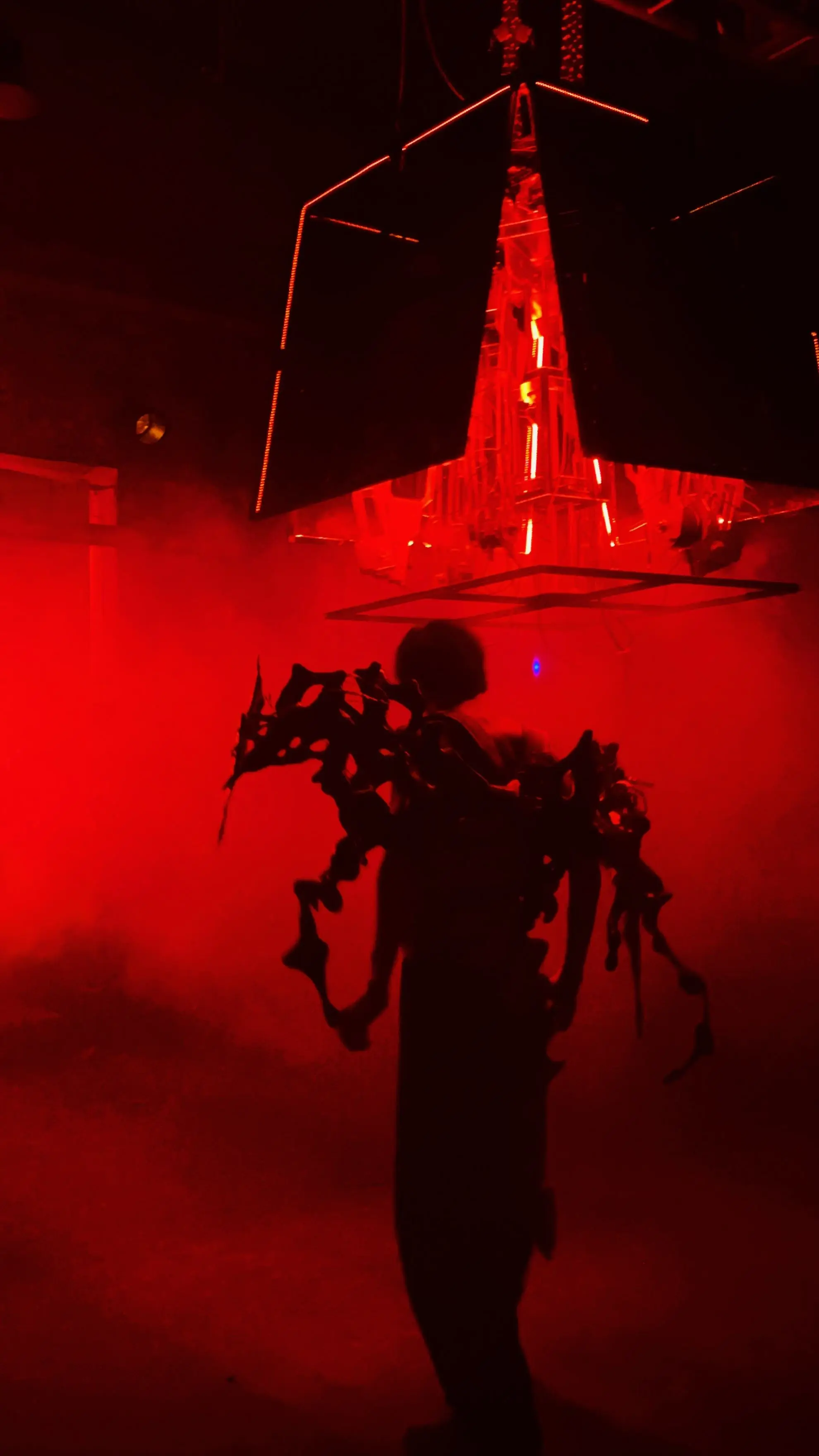
The work treats the machine as the centre of a ritual rather than a piece of stage equipment. The audience gathers underneath; the structure breathes overhead; a wearable mechanical extension carries the system onto a human body and into the crowd.
Two builds
Blackbox is an evolving system, not a fixed object. The first build was staged at Groundless Camp in Beijing and in London. In 2026 the machine was rebuilt with reworked mechanics, lighting and laser design, and staged at ‘ARCH’ — a techno night in London where DFFF ran lighting, laser geometry, audiovisual control and live visuals against the set, the machine performing as part of the line-up.
The two builds are versions of one another, not copies. Between them the machine went back to the workshop and was rethought — which movements read from the floor and which do not, where light should sit on the structure and where it should be thrown off it. What returned at ‘ARCH’ was recognisably the same body with new behaviour, performing to a room that had come for the music and stayed underneath the machine.
Inside the machine
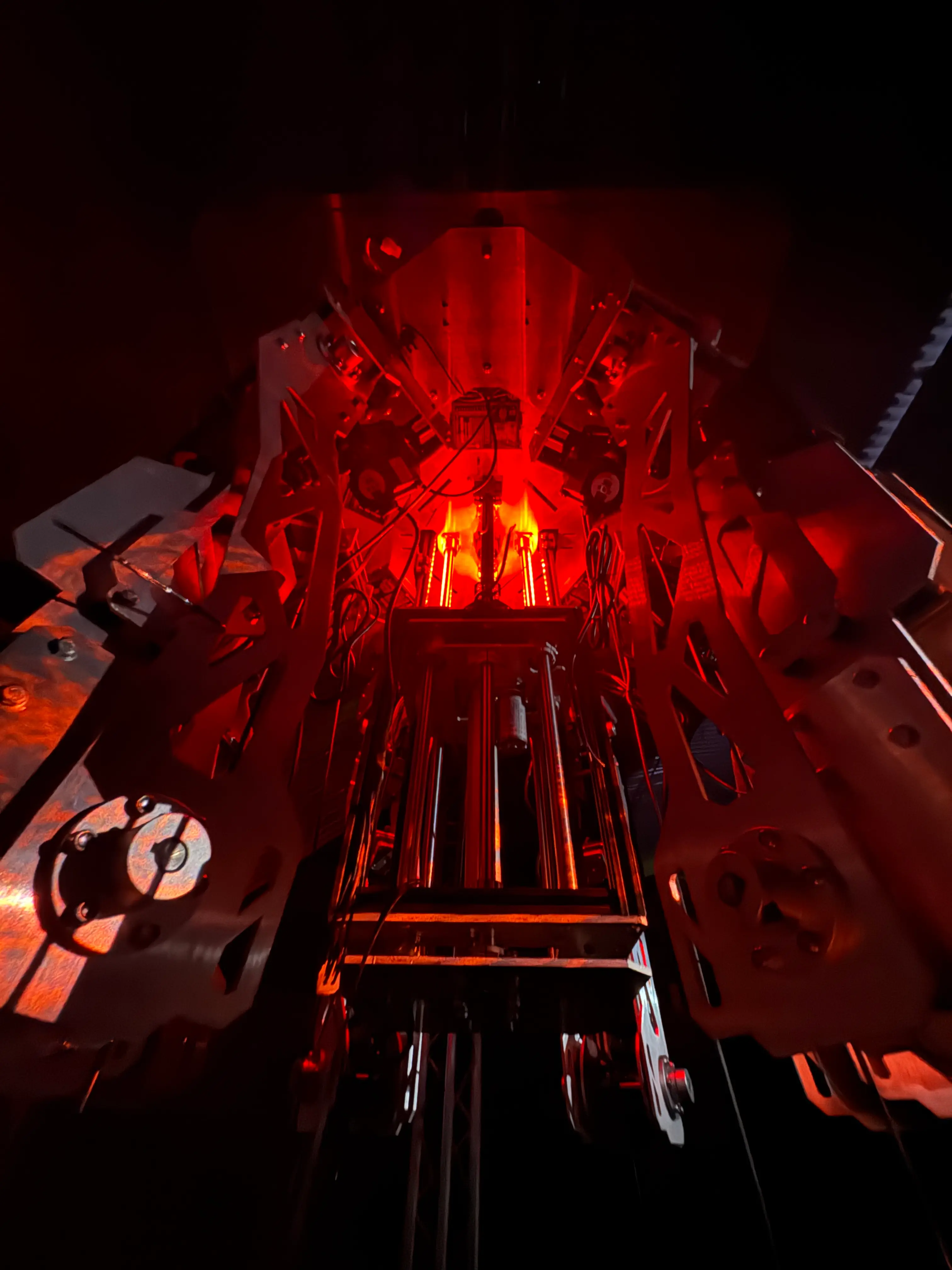
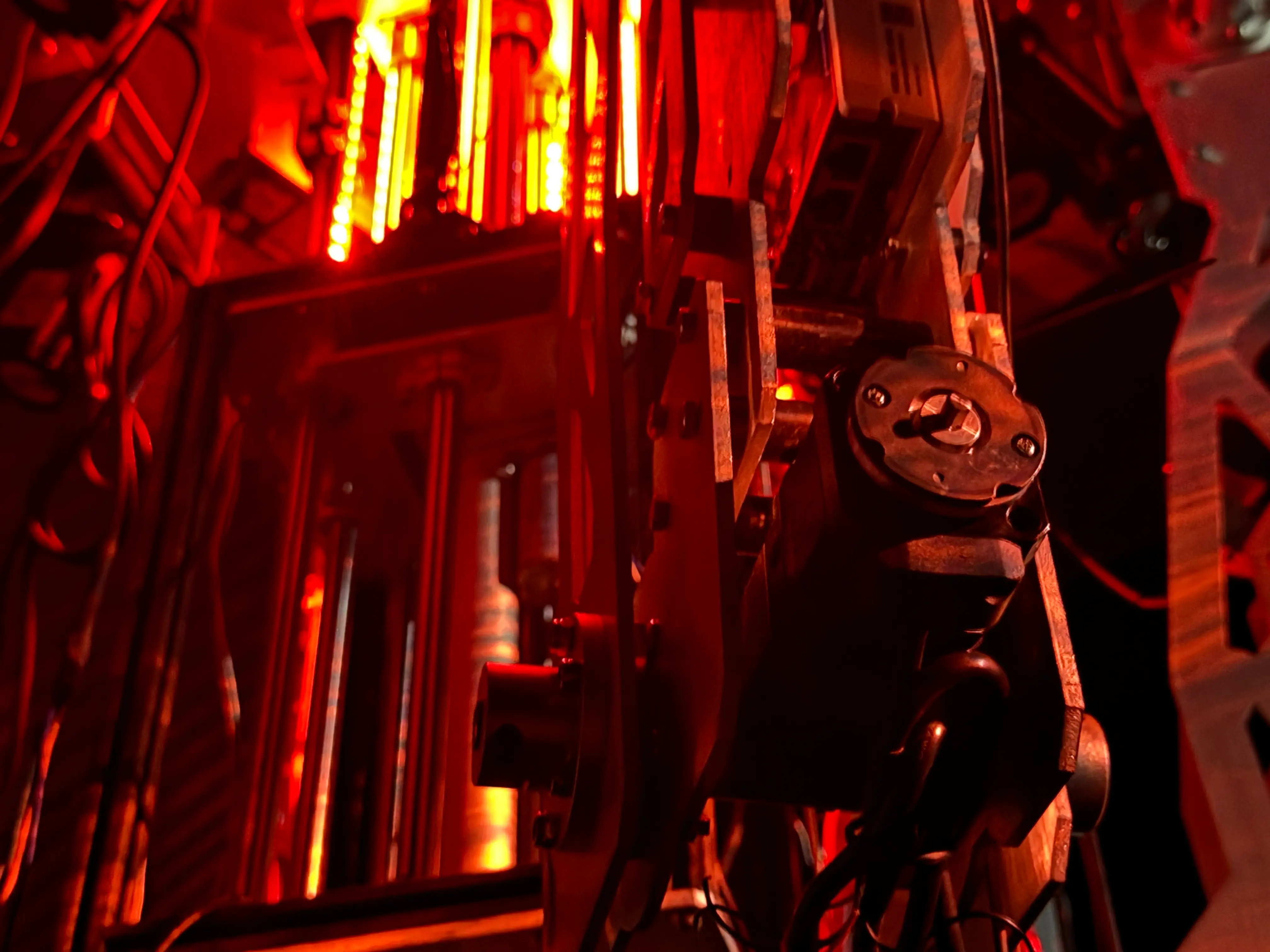
Blackbox is designed, engineered and fabricated in-house as a modular system: a suspended steel frame carries interchangeable aluminium mechanisms, motor drives and LED arrays, so the machine can be dismantled, shipped and reassembled for each space it enters — and rebuilt between versions.
Modularity is what lets the work travel. The frame breaks down into transportable elements; each mechanism detaches as a complete unit and moves with its motors and cabling; the custom electronics that drive movement, light and lasers are reconnected and tested on site before the doors open. The same logic makes the machine revisable — a single mechanism can be replaced or reworked without redesigning the body around it, which is what made the 2026 rebuild possible.
Control runs through the same electronics. In performance the machine is not left on a loop: movement, LED arrays, lasers and fog are played live against the music, so the mechanical body and the room’s audiovisual language operate as one instrument. The wearable extension belongs to the same system, letting the machine leave its rigging and move through the crowd on a human body.
In the space
Blackbox is made for dark rooms and late hours. It performs for a crowd rather than a seated audience: people gather and move beneath it, and the machine’s opening and closing, its red light and its fog, set the pace of the room. At club and techno events it takes the position of a live act — part of the line-up, not set dressing.
Because the system dismantles, ships and reassembles, the work tours between venues the way a performer does, and the rhythm of a pop-up installation is native to it: arrive in a space, perform for a night, leave the room empty again. Every install is an adaptation — rigging points, sightlines and fog carry differently in every room, and the machine is tuned to each space it enters.
Blackbox is the clearest statement of what DFFF builds: not scenography around a stage, but a machine that is itself the performance — a spatial experience with a mechanical body at its centre.
Credits
- Concept, design, engineering & fabricationDFFF Studio
- Lighting design, audiovisual control, live visuals & laser design — 'ARCH', 2026DFFF Studio
Shown at
- Groundless Camp, Beijing
- London
- 'ARCH' — techno event, London, 2026 (rebuilt version)